Articles
Reference and analysis on offshore wind dropper cables, connection systems, and the procurement decisions around them — written for engineers and procurement teams, not search engines.
All articles
-
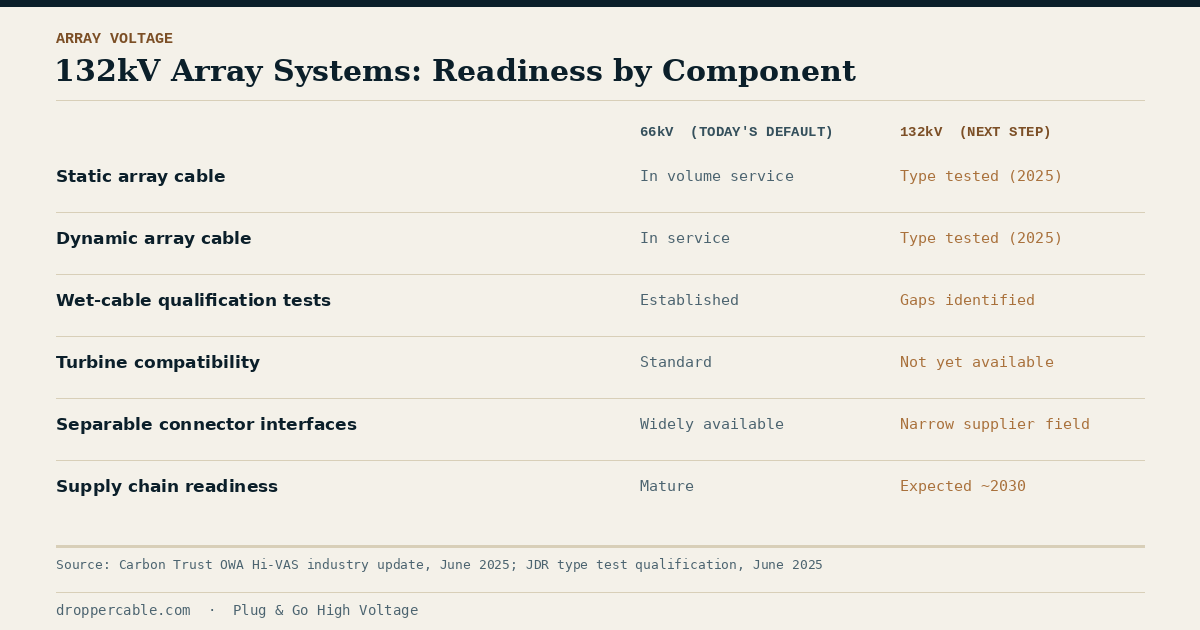 132kV Array Systems: What the Next Voltage Step Asks of Dropper Cables
 What the Hi-VAS work concluded about 132kV array systems, where the qualification gaps sit, and what doubling voltage again asks of the turbine connection.
-
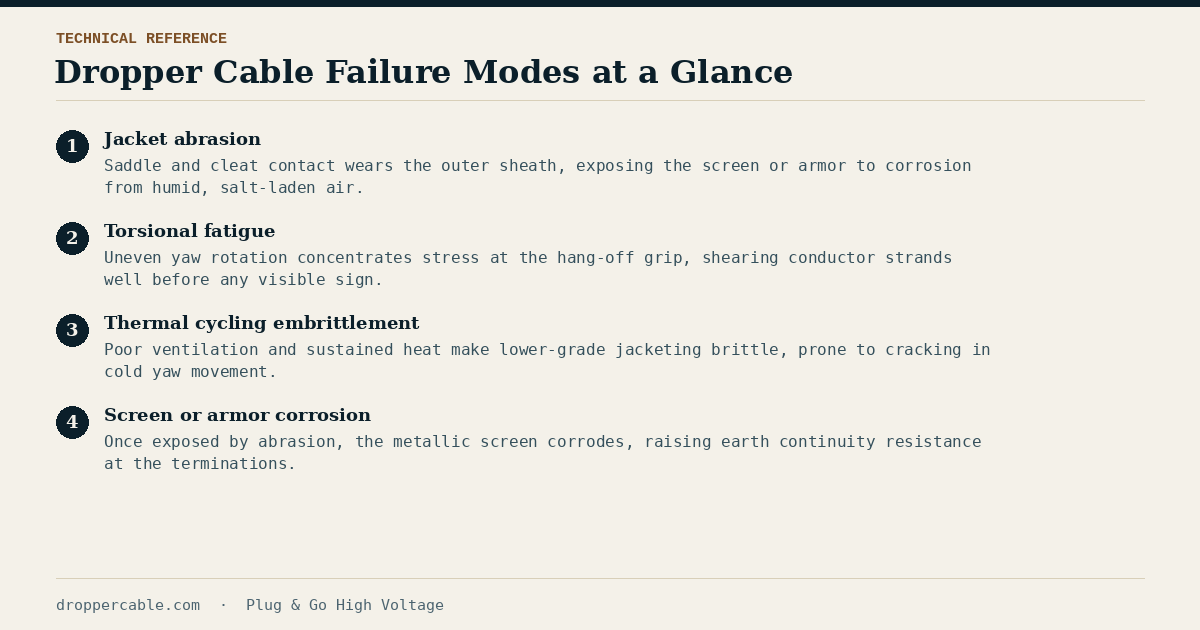 Dropper Cable Failure Modes: A Root Cause Reference
 The four most common dropper cable failure modes, what causes each one mechanically, and what it looks like before it becomes an electrical fault.
-
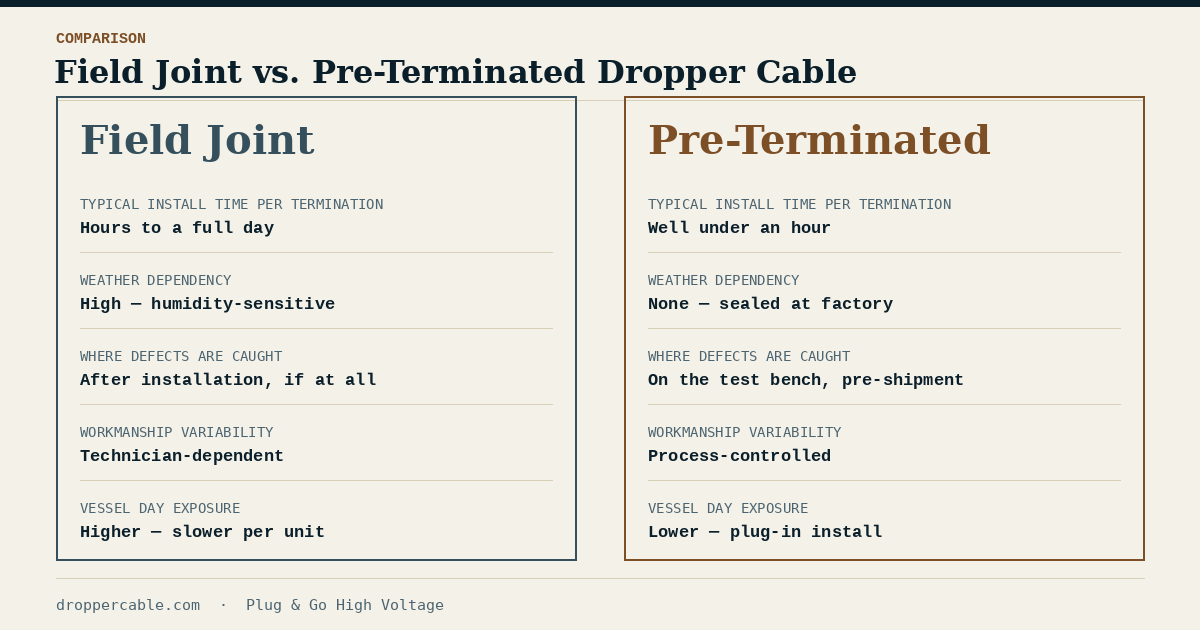 Field Jointing vs. Pre-Terminated Dropper Cables: Cost and Schedule Comparison
 Why the real cost difference between field-jointed and pre-terminated dropper cables shows up in vessel days and failure rate, not the cable's price tag.
-
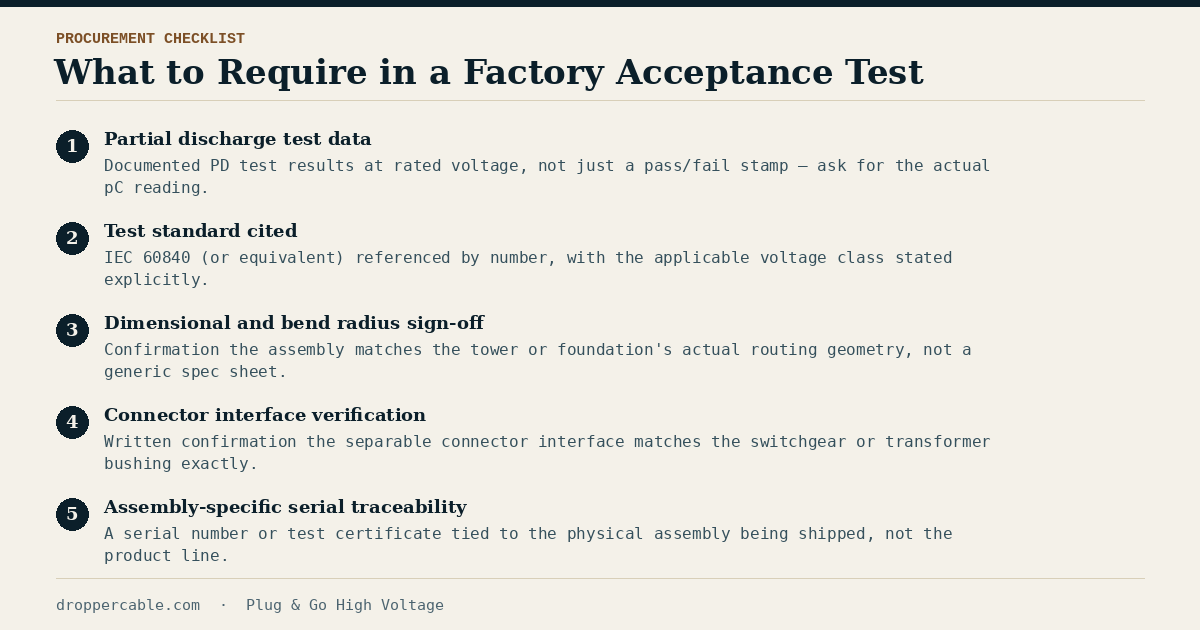 Factory Acceptance Testing: What to Require From a Dropper Cable Supplier
 A five-item checklist for what a dropper cable factory acceptance test report should actually contain, beyond a datasheet pass/fail stamp.
-
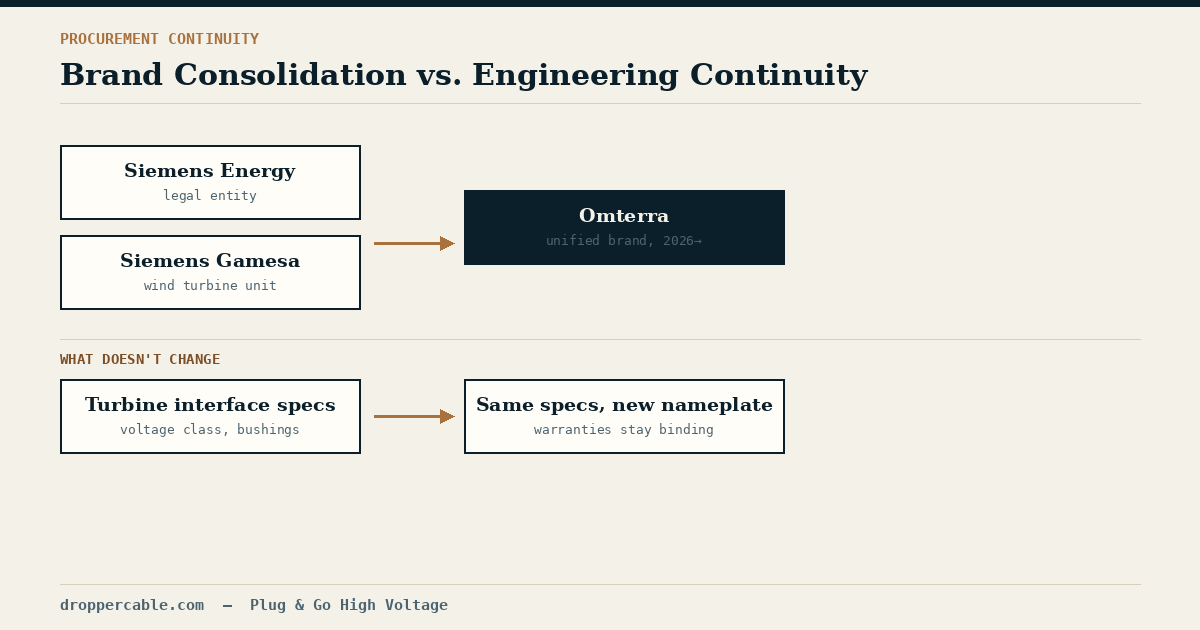 Siemens Energy and Siemens Gamesa Are Becoming Omterra
 Siemens Energy's move to unify with Siemens Gamesa under Omterra is a naming change, not an engineering one — here's what procurement teams should verify.
-
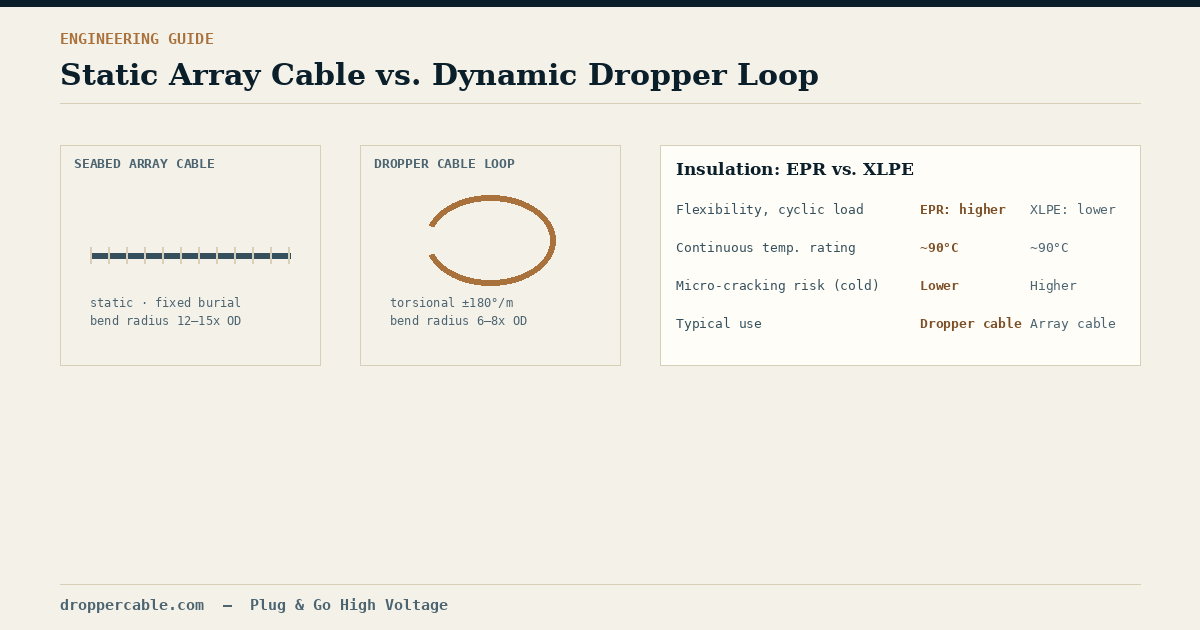 Engineering Dropper Cables: Torsion, Heat, Pre-Termination
 A technical look at what makes offshore wind dropper cables different from standard cable: torsional fatigue, EPR vs. XLPE insulation, pre-termination.
-
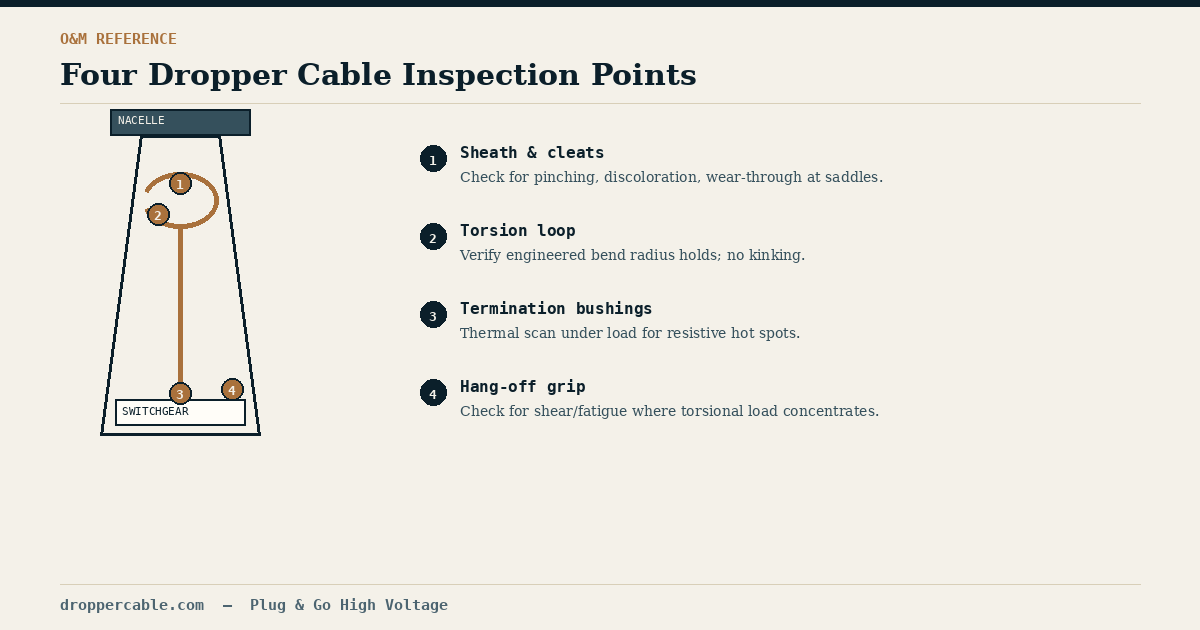 Inspecting and Replacing Offshore Wind Dropper Cables
 Dropper cables fail quietly until they don't. How to spot jacket abrasion and torsional fatigue early, and why pre-terminated kits speed replacement.
-
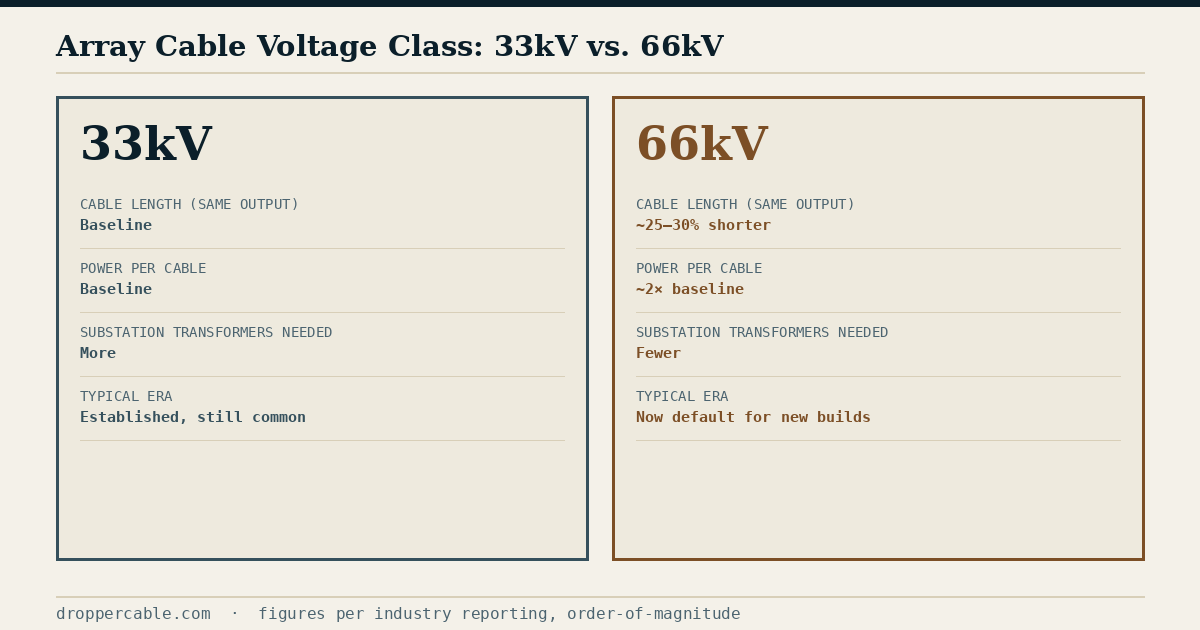 66kV vs. 33kV Offshore Array Cables: Why Voltage Class Matters
 Why most offshore wind projects now specify 66kV inter-array cables, what it changes about dropper cable and connector design, and what to check first.
-
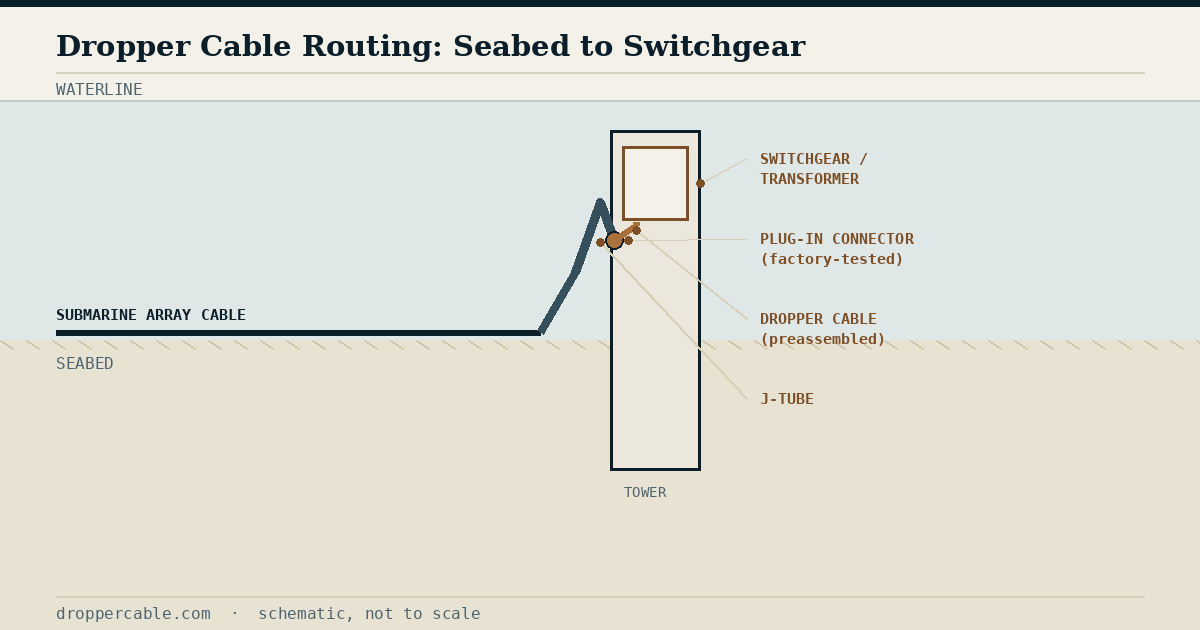 What Is a Dropper Cable? Why Offshore Wind Uses Them
 A practical look at preassembled dropper cable systems, why the industry moved away from field jointing, and what to ask suppliers about.